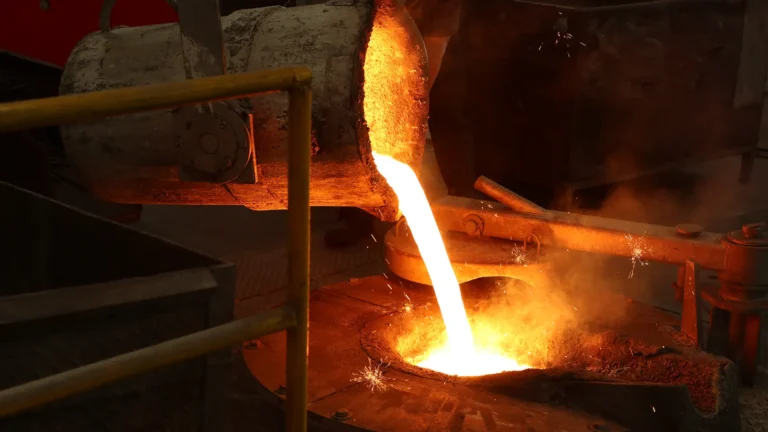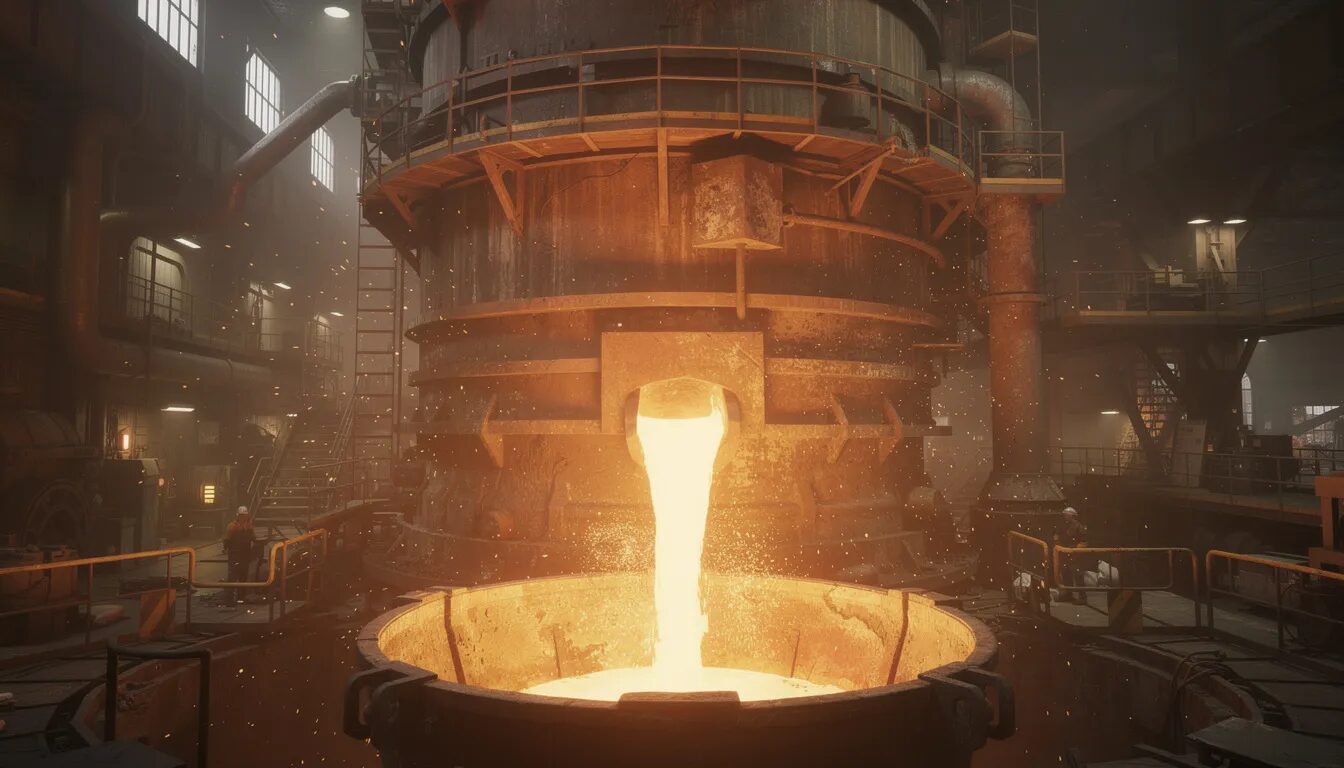

In 2023, world metal production exceeded 2 billion tons, with metallurgical processes serving as the crucial bridge between raw ore deposits and the refined materials powering modern civilization. From the copper wiring in your smartphone to the steel framework of skyscrapers, every metal product undergoes sophisticated extraction and refining procedures that transform rocks from the earth’s crust into engineered materials.
Understanding metallurgical processes is essential for anyone working in materials engineering, mining operations, or manufacturing. These systematic methods represent thousands of years of technological evolution, now refined into highly efficient industrial operations that feed the global economy’s insatiable demand for metals. Metallurgy is also crucial in industries such as aviation, public transportation, and electronics, where metals are used to create machinery and construction materials.
This comprehensive guide will walk you through every aspect of modern metallurgy, from initial ore preparation through final product refinement. You’ll discover how various processes work, when to apply different techniques, and what factors drive decision-making in industrial operations.
Key Takeaways
- Metallurgical processes encompass three main categories: mineral processing (ore preparation), extractive metallurgy (metal extraction), and physical metallurgy (property modification)
- Pyrometallurgy uses high-temperature processes like smelting and roasting, while hydrometallurgy employs aqueous chemical reactions for metal extraction.
- Ore concentration techniques such as froth flotation and magnetic separation are essential first steps before actual metal extraction begins.
- Reduction processes remove oxygen from metal oxides or add electrons to metal ions, with methods ranging from carbon reduction to electrolysis.
- Modern metallurgical plants rely on advanced instrumentation to monitor temperature, pressure, and chemical composition for optimal process control.
What Are Metallurgical Processes?
Metallurgical processes are systematic methods for extracting, purifying, and modifying metals from their ores through a combination of physical and chemical transformations. At their core, these processes convert raw geological materials into engineered products with specific properties tailored for countless applications across many industries. Modern metallurgists work in both traditional and emerging areas, collaborating with material scientists and engineers to develop innovative solutions.
The field of metallurgy traditionally divides into three interconnected stages, each serving a distinct purpose in the overall transformation chain. Ore preparation involves crushing, grinding, and concentrating valuable minerals while removing unwanted gangue materials.
Metal extraction applies chemical processes to reduce metal compounds and recover the desired metal from concentrated ore. Property enhancement uses heat treatment and mechanical processing to optimize the physical properties of extracted metals.
Modern metallurgical operations distinguish between physical processes and chemical processes based on the nature of the transformation involved.
Physical processes include crushing, grinding, magnetic separation, and various mechanical operations that change particle size or separate materials based on physical properties.
Chemical processes encompass reduction reactions, oxidation, leaching with aqueous solutions, and other transformations that alter the chemical composition of materials.
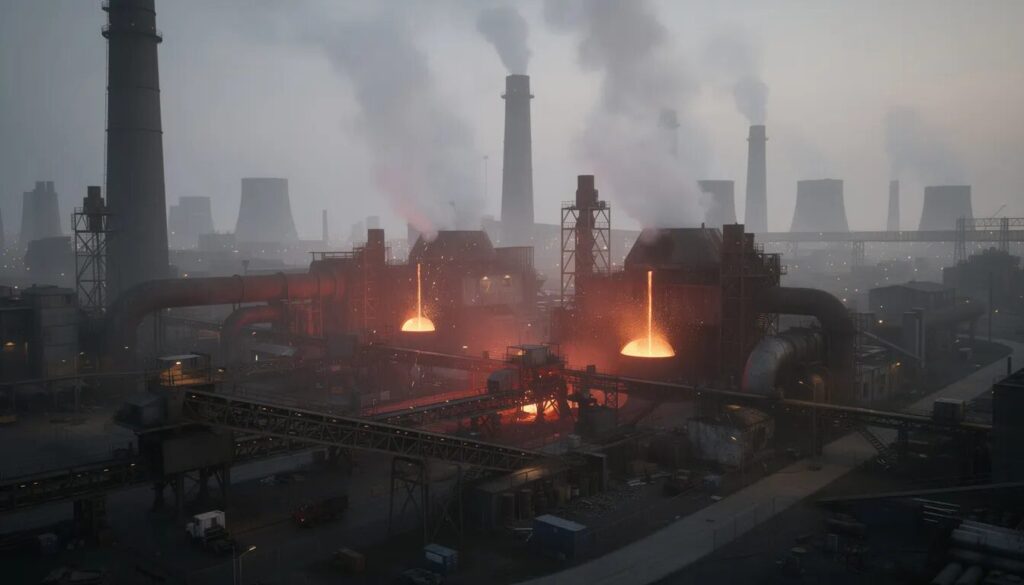
The economic importance of metallurgical processes cannot be overstated. Global metal production generates hundreds of billions of dollars annually, supporting industries from automotive manufacturing to renewable energy infrastructure.
Steel alone accounts for approximately 1.8 billion tons of annual production, while aluminum contributes another 65 million tons to global metal production.
Environmental considerations have become increasingly central to metallurgical practice. Modern facilities implement sophisticated emission control systems, achieve 90-95% water recycling rates, and explore circular economy principles to minimize waste.
Sustainable metallurgy practices now influence process selection, with many companies prioritizing energy efficiency and reduced carbon footprints alongside traditional economic factors.
The knowledge required for successful metallurgical operations spans chemistry, physics, thermodynamics, and engineering principles.
Process control technology enables precise monitoring of temperature, pressure, and composition parameters, while advanced instrumentation ensures consistent product quality and operational safety.
History of Metallurgy
The history of metallurgy traces humanity’s remarkable journey in extracting and manipulating metals, shaping the course of civilization. The earliest evidence of metal use dates back to around 40,000 BCE with native gold, which could be found in its pure form and used directly without smelting. Early humans also worked with native copper, silver, and meteoric iron, marking the dawn of metalworking.
Around 6,200 to 5,000 BCE, archaeological findings in the Balkans and the Carpathian Mountains reveal the earliest smelting activities, particularly copper smelting, marking the transition from using native metals to extracting metals from ores. This period, known as the Chalcolithic or Copper Age, laid the foundation for more complex metallurgical techniques.
The Bronze Age, beginning around 3,000 BCE, represented a significant technological advance with the discovery of bronze, an alloy of copper and tin. This alloy was stronger and more durable than its constituent metals, revolutionizing tools, weapons, and art across ancient civilizations such as Mesopotamia, Egypt, and the Indus Valley. The discovery of bronze also transformed warfare, agriculture, and trade, marking a pivotal moment in human history.
The Iron Age commenced approximately in 1200 BCE with the development of iron smelting and forging techniques, first mastered by the Hittites of Anatolia. Iron’s abundance and superior mechanical properties eventually replaced bronze as the dominant metal, profoundly impacting agriculture, warfare, and infrastructure in many cultures.
The Industrial Revolution in the 18th and 19th centuries marked a pivotal era for metallurgy, introducing mass-production techniques such as the Bessemer process and open-hearth furnaces. These innovations drastically lowered the cost of steel production, fueling rapid industrialization and urbanization worldwide.
In the 20th century and beyond, metallurgy evolved with the development of specialized alloys, advanced heat-treatment methods, and sophisticated analytical techniques, such as electron microscopy and computational modeling. These advancements enabled the creation of high-performance materials critical to aerospace, electronics, medical devices, and renewable energy technologies.
Today, metallurgy continues to progress, integrating digital technologies and sustainable practices to meet the demands of a modern, resource-conscious world, reflecting thousands of years of human ingenuity and adaptation.
Types of Metallurgical Processing
Metallurgical processes are classified primarily by the temperature and medium used for metal extraction, with each approach offering distinct advantages for different ore types and target metals. Key techniques in metallurgy include froth flotation, magnetic separation, smelting, electrolysis, distillation, liquation, and zone refining, each tailored to specific material properties and industrial needs.
Understanding these classifications helps engineers select the most appropriate method for specific applications, while considering factors such as energy requirements, environmental impact, and final product specifications.
Pyrometallurgy
Pyrometallurgy encompasses high-temperature processes operating above 600°C that utilize thermal energy to drive chemical reactions that separate metals from their ores. This approach represents the most common metal extraction method globally, particularly for processing sulfide ores and producing the most common metal products in heavy industry.
The fundamental advantage of pyrometallurgy lies in its rapid processing capabilities. Smelting operations can process thousands of tons of ore daily, making them ideal for the large-scale production of standard metal products such as copper, lead, zinc, and iron. Energy recovery potential exists through heat exchangers and waste-heat utilization systems, thereby improving overall process efficiency.
However, pyrometallurgical processes consume substantial amounts of energy, typically requiring the combustion of fossil fuels or electrical heating to reach the necessary operating temperatures. Environmental emissions include particulate matter, sulfur dioxide, and other gases that require sophisticated control systems to meet regulatory standards.
Blast furnace iron production exemplifies pyrometallurgy on an industrial scale. Iron ore, coke, and limestone are continuously fed into furnaces operating at 1500-1600°C, producing molten iron at rates exceeding 10,000 tons per day in extensive facilities. The reduction reaction uses carbon monoxide generated from coke to remove oxygen from iron oxides, demonstrating the chemical processes fundamental to pyrometallurgy.
Copper flash smelting represents another significant pyrometallurgical application. Concentrated ore mixes with oxygen-enriched air and is injected into furnaces where sulfide minerals oxidize rapidly, generating enough heat to maintain molten metal temperatures without external fuel input. This process achieves copper recovery rates exceeding 95% while capturing sulfur dioxide for acid production.
Hydrometallurgy
Hydrometallurgy employs aqueous solutions and controlled chemical reactions to extract metals from ores at moderate temperatures, typically below 200°C. This approach proves particularly valuable for processing low-grade ores, oxidized materials, and situations where selective extraction of specific metals is required.
The hydrometallurgical process typically proceeds through three main stages: leaching, solution purification, and metal recovery. Leaching dissolves target metals using acid, alkaline, or specialized reagents. Solution purification removes impurities through precipitation, ion exchange, or solvent extraction. Metal recovery employs electrowinning, precipitation, or other techniques to obtain pure metal products.
Advantages of hydrometallurgy include significantly lower energy requirements compared to pyrometallurgy, enhanced selectivity for specific metals, and suitability for processing complex ores containing multiple valuable metals. The process generates fewer atmospheric emissions and often achieves higher recovery rates for precious metals.
Common reagents include sulfuric acid for copper and zinc extraction, hydrochloric acid for rare-earth processing, and specialized organic compounds for solvent extraction. Process control focuses on maintaining optimal pH, temperature, and reagent concentrations to maximize extraction efficiency while minimizing reagent consumption.
Gold cyanidation demonstrates hydrometallurgy’s effectiveness for the recovery of precious metals. Crushed ore mixes with dilute sodium cyanide solutions, forming stable gold-cyanide complexes that dissolve precious metals while leaving most gangue materials untouched. Subsequent processing recovers gold through activated carbon adsorption or zinc precipitation, achieving recovery rates exceeding 95% for suitable ores.
Copper solvent extraction-electrowinning (SX-EW) operations process oxide copper ores and low-grade sulfide materials. Acid leaching dissolves copper from crushed ore, creating pregnant solutions containing 2-5 g/L copper. Solvent extraction concentrates copper to 40-50 g/L while removing impurities, followed by electrowinning that deposits 99.99% pure copper cathodes.
Electrometallurgy
Electrometallurgy harnesses electrical energy to drive metal extraction and purification reactions, enabling the production of ultra-high-purity metals and the processing of highly reactive materials that resist conventional reduction methods. This approach proves essential for aluminum, magnesium, and various specialty metals.
The Hall-Héroult process for aluminum production exemplifies large-scale electrometallurgy. Alumina dissolves in molten cryolite at 950°C, creating an electrically conductive electrolyte. Direct current passing through the solution reduces aluminum oxide to molten aluminum metal while generating oxygen gas at carbon anodes. Energy requirements range from 13 to 15 kWh per kilogram of aluminum, making electricity costs a primary factor in plant location decisions.
Copper electrorefining achieves remarkable purity levels, upgrading 99.5% copper anodes to 99.99% pure cathodes. Impure anodes and pure copper cathodes are immersed in a sulfuric acid electrolyte, with a carefully controlled current density that ensures uniform copper dissolution and deposition. Precious metals concentrate in anode slimes for separate recovery, while most impurities remain in solution for treatment.
Electrowinning applications extend to zinc, nickel, and other metal recovery operations. Zinc electrowinning from purified sulfate solutions produces high-purity zinc cathodes while generating oxygen and acid for the process recycle. Nickel electrowinning processes laterite leach solutions and recycled materials, achieving high recovery rates with excellent product purity.
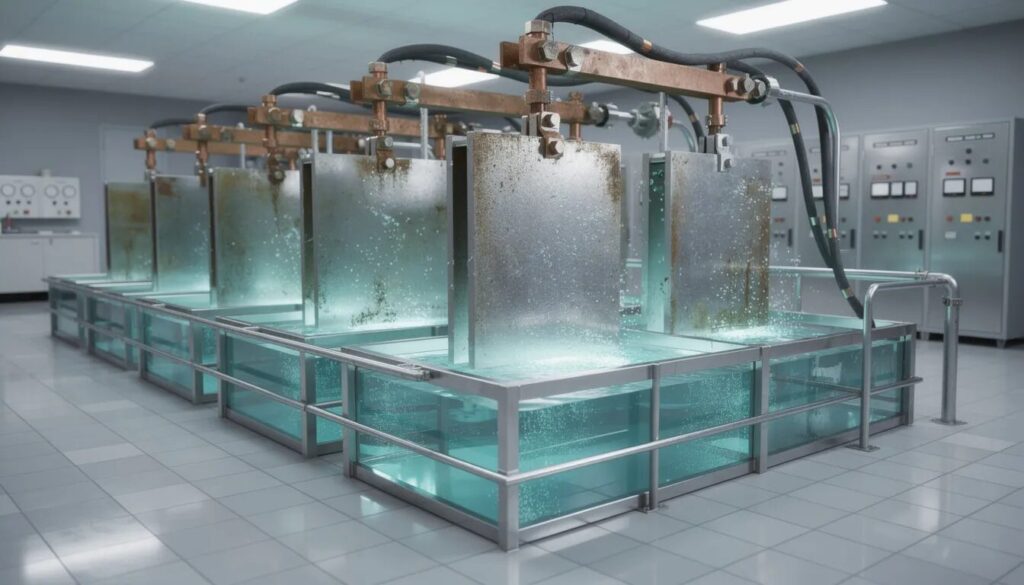
The primary challenge in electrometallurgy involves managing substantial electrical power requirements. Aluminum smelters rank among the world’s largest industrial electricity consumers, typically requiring dedicated power generation or location near low-cost energy sources. Operating costs fluctuate directly with electricity prices, making process efficiency improvements crucial for economic viability.
Ore Preparation and Concentration
Ore preparation serves as the foundation for all subsequent metallurgical processes, transforming raw materials from mining operations into concentrated feedstocks suitable for metal extraction. This critical phase determines the efficiency and economics of downstream processing while influencing final product quality and recovery rates.
Crushing operations reduce large ore pieces to manageable sizes, typically progressing through primary, secondary, and tertiary stages to achieve target particle size distributions. Primary crushers handle run-of-mine ore up to 1.5 meters in diameter, producing 150-300mm product for secondary crushing. Secondary and tertiary crushing further reduces material to 10-25mm sizes, optimal for grinding operations.
Grinding extends size reduction to liberate valuable minerals from gangue materials. Ball mills and rod mills process crushed ore with steel grinding media, achieving 80% passing sizes between 75-150 microns depending on ore characteristics and target liberation. Proper grinding is crucial because insufficient grinding locks valuable minerals in gangue, while excessive grinding wastes energy and may damage mineral surfaces.
Liberation analysis guides grinding optimization by measuring the degree of separation between valuable minerals and waste materials. Advanced techniques, such as automated mineralogy systems, provide detailed liberation data, enabling operators to optimize grinding conditions for maximum recovery at minimum energy consumption.
Size classification using screens and cyclones separates ground material into appropriate size ranges for subsequent processing. Cyclones exploit particle density and size differences to achieve sharp size separations, while screens provide mechanical classification for coarser materials. Closed-circuit grinding combines grinding and classification to maintain optimal particle size distributions.
Froth Flotation Process
Froth flotation represents the most widely used concentration method for sulfide ores, exploiting differences in mineral surface properties to achieve selective separation. This process concentrates valuable minerals from typically 1-5% ore grades to 20-35% concentrates suitable for metal extraction.
The flotation process begins with ore conditioning, in which ground ore is mixed with water to form a pulp containing 25-40% solids by weight. Chemical reagents modify mineral surface properties to enhance selectivity. Collectors like xanthates adsorb onto valuable mineral surfaces, making them hydrophobic and more likely to attach to air bubbles. Frothers such as MIBC create stable foam structures that carry floating minerals to the surface.
Modifiers and depressants control the flotation behavior of different minerals, enabling the selective separation of complex ore assemblages. Lime adjusts pH to optimize reagent performance and depress pyrite flotation. Sodium cyanide depresses pyrite and pyrrhotite in copper flotation circuits. Zinc sulfate activates sphalerite for flotation while depressing other sulfide minerals.
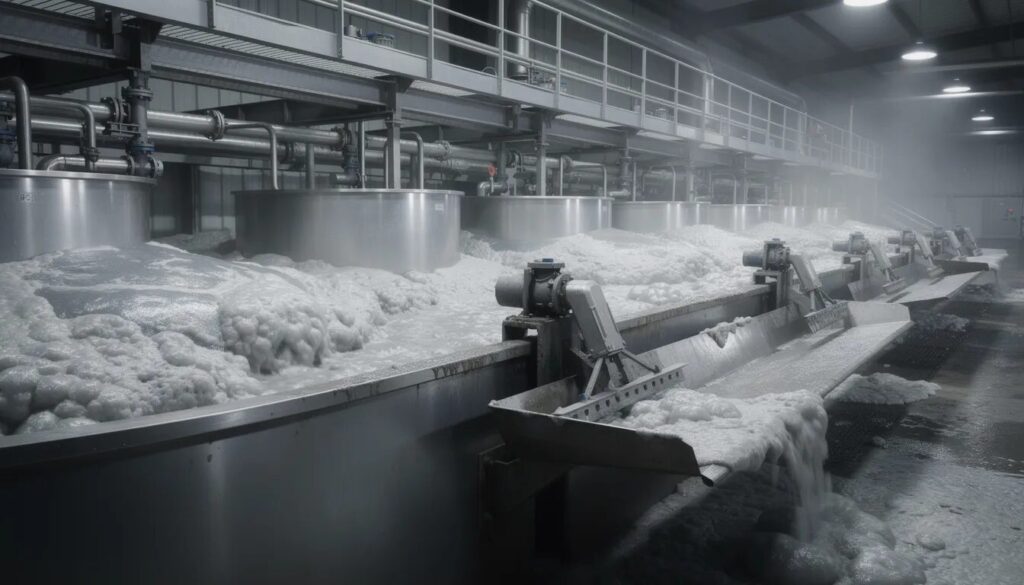
Air injection creates the bubbles essential for mineral collection. Mechanical flotation cells use impellers to generate fine air bubbles while maintaining pulp suspension. Column flotation cells rely on external air spargers to create bubbles, providing enhanced selectivity for fine-grained materials.
Froth collection involves skimming the mineral-rich foam from flotation cell surfaces. Concentrate handling systems transport froth to downstream processing while tailings discharge to thickening and disposal systems. Multiple flotation stages typically achieve optimal metallurgical performance, with rougher flotation providing initial concentration, cleaner flotation upgrading concentrate quality, and scavenger flotation maximizing recovery from tailings.
Typical recovery rates for copper flotation range from 85-92%, with concentrate grades reaching 25-30% copper content from feed grades of 0.5-1.5% copper. Molybdenum flotation achieves 85-90% recovery with concentrates grading 45-55% molybdenum. Coal flotation recovers 70-85% of combustible material while reducing ash content from 30-40% to 8-12%.
Magnetic and Gravity Separation
Magnetic separation exploits differences in magnetic susceptibility to concentrate iron-bearing minerals and remove magnetic contaminants from various materials. Iron ore concentration represents the largest application, upgrading low-grade magnetite and hematite ores for steel production.
Low-intensity magnetic separation using magnetic drums effectively concentrates magnetite ores. Ground ore passes over rotating magnetic drums where magnetite particles adhere to drum surfaces while non-magnetic gangue materials discharge separately. This simple process achieves iron recoveries exceeding 90% while producing concentrates containing 65-68% iron from feed grades of 25-35%.
High-intensity magnetic separators process weakly magnetic materials like hematite, ilmenite, and various industrial minerals. These systems generate magnetic field strengths up to 2 Tesla, enabling separation of minerals with low magnetic susceptibility. Wet high-intensity magnetic separation typically processes -1mm materials in high-gradient magnetic fields created by ferromagnetic matrices.
Gravity separation techniques exploit density differences between valuable minerals and gangue materials. Dense media separation immerses ore in heavy liquids or suspensions with specific gravities intermediate between valuable minerals and waste materials. Materials denser than the medium sink while lighter materials float, enabling efficient separation based purely on density differences.
Jigs utilize pulsating water flows to stratify materials by density. Heavy minerals settle through lighter materials during the expansion phase of each pulse, gradually concentrating at the bottom of the jig bed. This process effectively concentrates materials with significant density differences, such as gold placers, iron ore, and coal cleaning applications.
Shaking tables provide excellent separation efficiency for fine materials through combined gravity and water flow effects. Ore feeds onto an inclined table surface equipped with riffles that trap heavy minerals while water flow carries away lighter materials. Careful adjustment of table slope, stroke frequency, and water flow rates achieves sharp separations with minimal water consumption.
Selection criteria for concentration methods depend on ore mineralogy, particle size distribution, and target product specifications. Flotation suits sulfide ores and materials where surface chemistry modifications enable selective separation. Magnetic separation applies to materials with significant differences in magnetic properties. Gravity separation works best for materials with large density differences and appropriate particle sizes.
Metal Extraction and Reduction Methods
Metal extraction represents the core transformation where chemical processes convert concentrated ores into crude metals through reduction reactions that remove oxygen from metal oxides or transfer electrons to metal ions. The selection of appropriate reduction methods depends on metal reactivity, ore characteristics, and economic considerations.
Thermodynamic principles govern reduction reactions by determining the conditions under which metals can be separated from their compounds. The Ellingham diagram illustrates the temperature and atmospheric conditions required for various reduction reactions, guiding metallurgists in selecting appropriate processes and operating conditions.
Metal reactivity determines the energy requirements and methods suitable for extraction. Highly reactive metals like aluminum and magnesium require electrolytic reduction because they cannot be reduced chemically under practical conditions. Moderately reactive metals like iron and zinc undergo reduction with carbon or carbon monoxide at elevated temperatures. Less reactive metals like copper and lead can be reduced through roasting and smelting operations.
Chemical Reduction
Chemical reduction employs reducing agents like carbon, hydrogen, or reactive metals to remove oxygen from metal oxides or reduce metal ions to metallic form. This approach dominates industrial practice for iron, copper, lead, and zinc production due to its economic advantages and well-established technology.
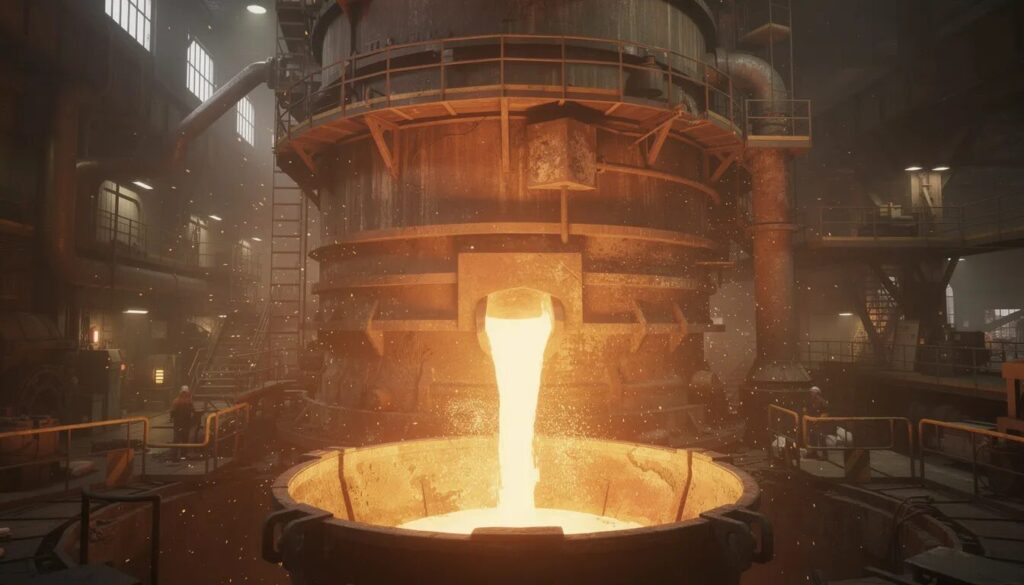
Carbon reduction using coke represents the most common reduction method for iron extraction in blast furnaces. Coke combustion generates carbon monoxide, which reduces iron oxides according to the reaction Fe2O3 + 3CO → 2Fe + 3CO2. Blast furnace operations maintain temperatures around 1500°C while continuously feeding iron ore, coke, and limestone to produce molten iron and slag.
Direct reduction processes use natural gas or coal to reduce iron ore at temperatures below the melting point, producing solid sponge iron suitable for electric arc furnace steelmaking. The MIDREX process reduces iron ore pellets with hydrogen and carbon monoxide generated from natural gas reforming, achieving metallization rates exceeding 92% while consuming 10-11 GJ per ton of product.
Hydrogen reduction suits metals like tungsten and molybdenum that form stable carbides when reduced with carbon. Tungsten oxide reduction with hydrogen at 800-1000°C produces tungsten powder with carefully controlled particle size distribution for powder metallurgy applications. This process avoids carbon contamination while maintaining excellent control over product characteristics.
Metal reduction using reactive metals like sodium and magnesium enables extraction of titanium, zirconium, and other specialty metals. The Kroll process reduces titanium tetrachloride with magnesium at 800-900°C, producing titanium sponge that requires further processing to achieve commercial product forms. Sodium reduction of titanium tetrachloride offers advantages for certain applications through modified product characteristics.
Cost analysis for different reducing agents considers raw material prices, energy requirements, and product quality factors. Carbon reduction generally provides the lowest cost option for suitable materials, while hydrogen reduction offers superior product quality at higher cost. Metal reduction suits specialty applications where product purity justifies premium costs.
Electrolytic Reduction
Electrolytic reduction harnesses electrical energy to reduce metal compounds that resist chemical reduction methods, enabling production of highly pure metals and processing of reactive materials. This approach proves essential for aluminum, magnesium, and various specialty metal production.
Aluminum production through the Hall-Héroult process represents the largest electrolytic reduction application globally. Alumina dissolves in molten cryolite at 950°C, creating an electrolyte with sufficient conductivity for electrolysis. Carbon anodes provide the reducing environment while steel cathodes collect molten aluminum. Current densities reach 0.7-1.0 A/cm² with energy consumption of 13-15 kWh per kilogram of aluminum.
Cell design considerations include anode and cathode materials, electrolyte composition, and thermal management systems. Carbon anodes gradually consume during operation, requiring periodic replacement and careful monitoring to maintain optimal anode-cathode distances. Cathode design influences current distribution and aluminum quality, while insulation systems minimize heat losses and maintain thermal stability.
Magnesium extraction using the Dow process electrolyzes molten magnesium chloride at 700-750°C. Chlorine gas evolution at graphite anodes enables regeneration of electrolyte components while maintaining process continuity. Energy requirements reach 18-20 kWh per kilogram of magnesium, making electricity costs a primary economic factor.
Advanced electrolytic processes under development include inert anodes for aluminum production that eliminate carbon consumption and CO2 generation. These systems use ceramic or metal anodes that resist oxidation while maintaining sufficient electrical conductivity. Successfully implementing inert anode technology could reduce aluminum production emissions by 30% while improving overall process efficiency.
Energy requirements vary significantly among electrolytic processes. Aluminum production consumes 3% of global electricity generation, while magnesium production requires even higher specific energy consumption. Process improvements focus on reducing voltage drops, improving current efficiency, and optimizing thermal management to minimize energy waste.
Electrode materials and cell maintenance represent ongoing operational challenges. Carbon anodes gradually oxidize during aluminum production, requiring replacement every 3-4 weeks. Cathode deterioration affects current distribution and product quality, necessitating periodic cell rebuilding. Electrolyte management involves maintaining optimal chemical composition while minimizing impurity buildup that reduces efficiency.
Refining and Purification Processes
Refining and purification processes remove remaining impurities from crude metals to achieve the desired metal purity levels required for specific applications. These final processing steps determine whether metals meet quality standards for electrical applications, aerospace components, or other demanding uses where impurities would compromise performance. Zone refining produces ultra-pure metals by exploiting the solubility of impurities in the molten state compared to the solid state, making it a critical technique for high-purity applications.
Quality standards vary dramatically across applications. Electrical copper requires 99.99% purity to minimize resistance losses, while construction steel tolerates higher impurity levels without performance degradation. Understanding these requirements guides selection of appropriate refining methods and establishes the economic trade-offs between purity and processing costs.
Economic considerations heavily influence refining decisions because higher purity typically demands more sophisticated and expensive processing. Producers carefully balance purity requirements against market premiums for high-purity products, optimizing refining intensity to maximize profitability while meeting customer specifications.
Fire Refining
Fire refining employs high-temperature oxidative processes to remove silicon, phosphorus, sulfur, and other impurities that form oxides more readily than the base metal. This approach suits metals where impurities can be selectively oxidized and removed as slag without excessive losses of valuable metal. Distillation is another refining method used for metals with low boiling points, such as zinc and mercury, offering an alternative for specific applications.
Copper fire refining in reverberatory furnaces represents a classical application of oxidative refining. Blister copper from smelting operations contains 98-99% copper along with sulfur, iron, and other impurities. Air injection at 1100-1200°C oxidizes sulfur to sulfur dioxide gas and iron to iron oxide slag. Careful temperature and atmosphere control prevents excessive copper oxidation while maximizing impurity removal.
The fire refining process typically proceeds in two stages: oxidation followed by reduction. Initial oxidation removes most impurities through selective oxidation and slag formation. Subsequent reduction using natural gas or other reducing agents eliminates excess oxygen and produces fire-refined copper containing 99.5-99.7% copper suitable for further processing.
Silver and gold cupellation processes separate precious metals from lead-containing materials through selective oxidation. Lead oxidizes to litharge (PbO) that absorbs other base metal impurities while precious metals remain metallic. This ancient technique continues to serve in precious metal refining operations where high recovery rates and established procedures offer advantages.
Temperature control proves crucial for successful fire refining because excessive temperatures cause unwanted metal losses while insufficient heat fails to drive oxidation reactions to completion. Atmosphere management through controlled air injection or fuel gas addition maintains optimal chemical conditions for selective impurity removal.
Electrolytic Refining
Electrolytic refining achieves exceptional purity levels through controlled electrochemical dissolution and deposition processes. This method produces metals suitable for electronic applications, precision alloys, and other uses where trace impurities would affect critical properties. It is widely used for metals like copper, zinc, and silver, where an electric current facilitates the purification process, ensuring high-quality outputs.
Copper electrorefining exemplifies large-scale electrolytic purification. Fire-refined copper anodes and pure copper starter sheets immerse in sulfuric acid electrolyte containing 160-200 g/L copper and 150-190 g/L sulfuric acid. Direct current at controlled voltage dissolves copper from anodes and deposits pure copper on cathodes.
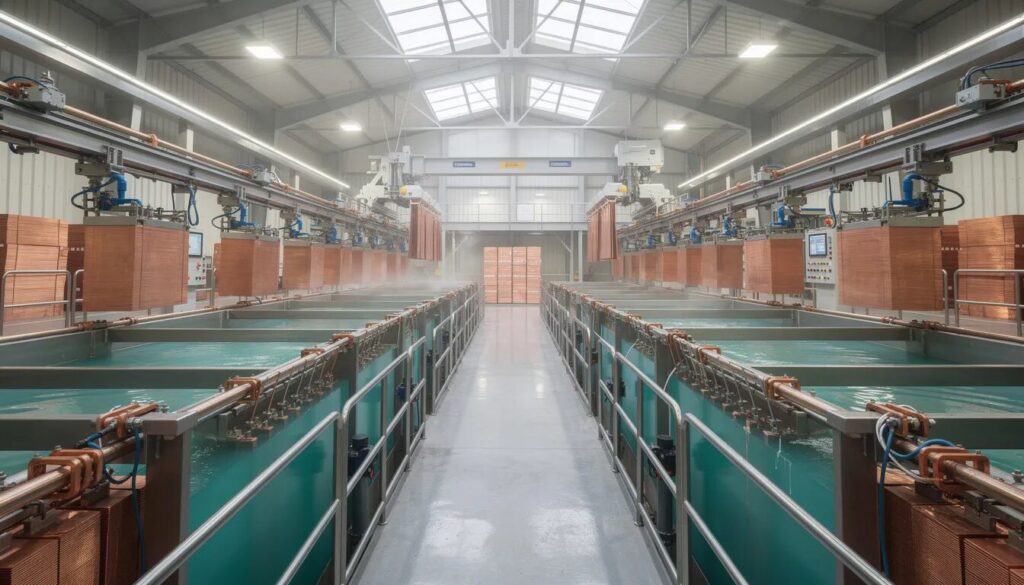
Tankhouse operations maintain precise control over current density, temperature, and electrolyte composition to ensure uniform deposition and maximum current efficiency. Current densities typically range from 200-300 A/m² with cell voltages around 0.25-0.35 volts. Temperature control at 60-65°C optimizes copper deposition while minimizing energy consumption.
Impurity behavior during electrolytic refining determines final product purity and precious metal recovery. Noble metals like gold, silver, and platinum group metals remain insoluble and accumulate in anode slimes for separate recovery. Less noble impurities dissolve but fail to deposit at cathode potentials, remaining in solution for bleeding and treatment.
Lead electrorefining processes sulfate electrolytes to produce high-purity lead for battery applications and specialty uses. Zinc electrorefining from purified sulfate solutions achieves 99.99% purity while generating oxygen for process use. These operations demonstrate the versatility of electrolytic methods across different metal systems.
Cell design optimization focuses on improving current distribution, minimizing voltage drops, and enhancing mass transfer. Modern installations use automated systems for anode and cathode handling, electrolyte circulation, and process monitoring. Advanced control systems maintain optimal operating conditions while maximizing throughput and product quality.
Solution chemistry management involves controlling electrolyte composition, removing accumulated impurities, and maintaining optimal additive concentrations. Organic additives improve deposit structure and prevent dendritic growth that could cause short circuits. Impurity bleeding prevents accumulation of detrimental elements while maintaining electrolyte balance.
Physical Metallurgy and Heat Treatment
Physical metallurgy encompasses the science of controlling metal properties through thermal and mechanical processing after extraction and purification. These techniques modify crystal structure, grain size, and mechanical properties to optimize metals for specific applications ranging from structural components to precision instruments. After extraction, metals often undergo various treatments to enhance their properties, such as hardness, ductility, corrosion resistance, and electrical conductivity.
Microstructural control represents the fundamental principle underlying physical metallurgy. Heat treatment and mechanical processing alter the arrangement of atoms, grain boundaries, and phases within metals, directly influencing properties like strength, hardness, ductility, and corrosion resistance.
The relationship between processing, structure, and properties guides metallurgical engineers in developing optimized treatment procedures. Understanding how thermal cycles affect phase transformations enables precise control over final properties while mechanical processing provides additional tools for property enhancement and shaping operations.
Heat Treatment Processes
Heat treatment modifies metal properties through controlled heating and cooling cycles that alter crystal structure and microstructural features. These thermal processes can dramatically change mechanical properties without altering chemical composition, providing versatile tools for property optimization.
Annealing serves as a stress relief and softening treatment for metals that have undergone cold working or other processing that introduced internal stresses. Steel annealing typically involves heating to 500-900°C followed by slow cooling to produce soft, stress-free material with excellent workability. The process eliminates work hardening effects and creates uniform, coarse grain structures that facilitate subsequent forming operations.
Different annealing variations serve specific purposes. Full annealing completely softens steel by heating above the transformation temperature and cooling slowly through the transformation range. Process annealing provides partial softening for intermediate forming operations without complete property changes. Spheroidizing produces rounded carbide particles that improve machinability in high-carbon steels.
Quenching and tempering represents a two-stage heat treatment that first hardens steel through rapid cooling, then tempers it to achieve optimal strength-toughness combinations. Quenching from austenitizing temperatures produces hard, brittle martensite that provides maximum strength and hardness. Subsequent tempering at 150-600°C reduces brittleness while maintaining acceptable strength levels.
The tempering temperature determines the final property balance. Low-temperature tempering (150-250°C) maintains high hardness for cutting tools and wear-resistant applications. Medium-temperature tempering (250-450°C) provides good strength with improved toughness for springs and hand tools. High-temperature tempering (450-600°C) maximizes toughness for structural applications requiring impact resistance.
Normalizing refines grain structure and eliminates segregation in steel through heating above the transformation temperature followed by air cooling. This treatment produces more uniform properties than annealing while providing better machinability than quenched and tempered conditions. Normalized steel often serves as starting material for subsequent heat treatments.
Case hardening treatments create hard surface layers while maintaining tough, ductile cores. Carburizing adds carbon to steel surfaces at 900-950°C, enabling subsequent quenching to produce hard cases with carbon gradients. Nitriding introduces nitrogen at 500-550°C to form hard nitride compounds without requiring quenching. These processes suit applications requiring wear resistance with good impact toughness.
Specific heat treatment cycles vary among different alloy systems. Aluminum alloys use solution treatment followed by aging to achieve precipitation strengthening. Copper alloys employ various annealing and stress-relief treatments depending on composition and intended use. Titanium alloys require careful control of heating and cooling rates to optimize microstructural development.
Mechanical Processing
Mechanical processing shapes metals while simultaneously modifying their properties through controlled deformation. These techniques enable production of complex geometries while achieving desired mechanical properties through work hardening and texture development.
Cold working operations like rolling, drawing, and forging strengthen metals through dislocation multiplication and grain deformation. Cold rolling reduces steel strip thickness while increasing yield strength through work hardening effects. The degree of cold work directly influences final properties, with 20-30% reduction producing moderate strengthening and 60-80% reduction achieving maximum work hardening.
Hot working performs forming operations above the recrystallization temperature, enabling extensive deformation without work hardening. Hot rolling processes steel slabs into plates, sheets, and structural shapes while controlling grain structure through controlled cooling. Forging operations produce components with superior grain flow and mechanical properties compared to cast or machined parts.
The temperature range for hot working depends on alloy composition and desired properties. Steel hot working typically occurs at 1000-1200°C, while aluminum alloys require 400-500°C. Proper temperature control prevents grain growth while ensuring adequate ductility for deformation.
Powder metallurgy enables production of complex shapes and unique alloy compositions through compaction and sintering of metal powders. Press and sinter operations achieve near-net-shape components with controlled porosity and properties. Hot isostatic pressing eliminates porosity while achieving full density in critical applications.
Advanced techniques like powder injection molding combine the versatility of plastic injection molding with the properties of sintered metals. Metal powders mix with binder systems for injection molding, followed by debinding and sintering to produce complex geometries with good dimensional accuracy.
Surface treatments modify surface properties without affecting bulk material characteristics. Shot peening introduces compressive stresses that improve fatigue resistance in springs, gears, and other highly stressed components. Thermal spraying deposits protective coatings for corrosion and wear resistance. Electroplating provides decorative finishes and functional surface properties.
Industrial Applications and Case Studies
Understanding how metallurgical processes apply in major industries provides practical context for the theoretical principles discussed throughout this guide. Real-world case studies demonstrate how process selection, optimization, and integration create value across different market sectors while illustrating the crucial role metallurgy plays in modern civilization.
Steel Production
Steel production represents the largest metallurgical industry globally, with integrated steel plants and electric arc furnace operations producing 1.8 billion tons annually. The industry demonstrates how different metallurgical processes integrate to create efficient production systems that serve construction, automotive, and infrastructure markets.
Integrated steel plants combine multiple metallurgical processes in sequence, starting with iron ore preparation and ending with finished steel products. Coking plants convert coal into metallurgical coke while recovering chemical byproducts. Sinter plants agglomerate iron ore fines into suitable blast furnace feed. Blast furnaces reduce iron ore to molten iron, which feeds basic oxygen furnaces for conversion to steel.
The blast furnace-basic oxygen furnace route processes iron ore, coke, and limestone to produce liquid steel with precisely controlled composition. Blast furnaces operate continuously for 10-15 years, processing 8,000-12,000 tons of materials daily while producing 5,000-8,000 tons of hot metal. Basic oxygen furnaces convert hot metal to steel in 40-45 minutes through controlled oxygen injection and flux additions.
Electric arc furnace steelmaking demonstrates how secondary metallurgy recycles scrap steel with 80% material efficiency compared to primary iron production. Electric furnaces melt steel scrap using electrical energy, achieving 95-98% metallic yield while minimizing raw material consumption. This process proves particularly valuable in regions with abundant steel scrap and low-cost electricity.
Continuous casting technology revolutionized steel production by eliminating ingot casting and rolling operations. Molten steel flows directly into continuous casting machines that solidify steel into slabs, billets, or blooms for subsequent rolling. This process improvement increased yields by 10-15% while reducing energy consumption and improving product quality.
Process optimization in modern steel plants focuses on energy efficiency, environmental performance, and product quality. Heat recovery systems capture waste heat from coke ovens and furnaces for steam generation and space heating. Water recycling systems achieve 95% recirculation rates while minimizing fresh water consumption. Advanced process control maintains optimal furnace conditions while minimizing energy consumption and emissions.
Aluminum Industry
The aluminum industry exemplifies how electrometallurgy enables production of lightweight, corrosion-resistant materials essential for transportation and packaging applications. Bauxite mining, alumina production, and primary smelting create an integrated supply chain that produced 65 million tons of primary aluminum in 2023.
Bauxite mining provides the raw material for aluminum production, with Australia, China, and Guinea supplying most global production. Open-pit mining operations extract bauxite ore containing 40-60% aluminum oxide along with iron oxide, silica, and other impurities. Ore preparation includes crushing, washing, and sometimes beneficiation to improve alumina content.
The Bayer process converts bauxite to alumina through caustic digestion, clarification, precipitation, and calcination. Bauxite dissolves in sodium hydroxide solution at 140-250°C, forming sodium aluminate while leaving impurities as red mud residue. Aluminum hydroxide precipitation occurs through controlled cooling and seeding, followed by calcination at 1000-1200°C to produce metallurgical-grade alumina.
Primary aluminum smelting uses the Hall-Héroult process to electrolyze alumina in molten cryolite electrolyte. Modern smelters operate 200-500 electrolytic cells in series, each producing 1-2 tons of aluminum daily. Energy consumption ranges from 13-15 kWh per kilogram of aluminum, making electricity costs 30-40% of production expenses.
Smelter technology continues advancing through improved cell design, process control, and energy efficiency measures. Prebaked anode technology reduces labor requirements while improving current efficiency. Advanced process control systems optimize cell voltage and thermal balance while minimizing energy consumption. Point feeding systems improve alumina distribution while reducing emissions.
Secondary aluminum recycling provides significant energy savings compared to primary production, requiring only 5% of the energy needed for primary aluminum. Recycling operations sort, clean, and remelt aluminum scrap to produce alloys for automotive, construction, and packaging applications. Recycled aluminum maintains properties equivalent to primary metal while reducing environmental impact.
Emerging technologies focus on improving smelting efficiency and reducing environmental impact. Inert anode development aims to eliminate carbon consumption and CO2 emissions from aluminum smelting. Process intensification through advanced reactor designs could reduce energy consumption while improving productivity. These innovations demonstrate how continued research drives metallurgical advancement.
Copper Processing
Copper processing illustrates the integration of mineral processing, pyrometallurgy, hydrometallurgy, and electrometallurgy to extract valuable metal from diverse ore types. The industry processes sulfide ores with grades as low as 0.3% copper while achieving recovery rates exceeding 90% through optimized process combinations.
Concentrator operations begin with crushing and grinding to liberate copper minerals from gangue materials. Typical processing rates range from 50,000 to 200,000 tons per day of ore, requiring substantial grinding capacity to achieve target liberation sizes of 150-200 microns. Ball mills and SAG mills consume 35-45 kWh per ton of ore while achieving 80% passing target sizes.
Froth flotation concentrates copper sulfide minerals from 0.5-2% ore grades to 25-30% concentrates suitable for smelting. Flotation circuits typically include rougher, cleaner, and scavenger operations to optimize both recovery and concentrate grade. Modern plants achieve copper recoveries of 88-92% while producing concentrates containing less than 8% moisture for transportation.
Smelting and converting operations process copper concentrates through pyrometallurgical reduction to produce blister copper containing 98-99% copper. Flash smelting technology dominates modern installations, using oxygen-enriched air to combust sulfide minerals while maintaining autothermal conditions. Converting removes iron and sulfur to produce blister copper suitable for fire refining.
Solvent extraction-electrowinning (SX-EW) operations process oxide copper ores and dump leach solutions through hydrometallurgical routes. Heap leaching with dilute sulfuric acid dissolves copper from oxide ores over 6-24 months, producing pregnant solutions containing 2-8 g/L copper. Solvent extraction concentrates copper while removing impurities, followed by electrowinning to produce 99.99% pure copper cathodes.
Advanced process control systems optimize concentrate grade and recovery while minimizing reagent consumption and energy use. Automated mineralogy systems provide real-time feedback on mineral liberation and flotation performance. Expert control systems adjust grinding and flotation parameters to maintain optimal metallurgical performance despite ore variability.
Recycling represents an increasingly important source of copper supply, accounting for 35% of global copper consumption. Secondary smelting processes electronic scrap, wire, and other copper-bearing materials to recover high-quality copper for reuse. Hydrometallurgical processing of complex electronic wastes enables recovery of copper along with precious metals and rare elements.
Process Control and Instrumentation
Modern metallurgical operations rely heavily on sophisticated instrumentation and control systems to maintain optimal process conditions, ensure product quality, and maximize efficiency. The integration of sensors, analyzers, and automated control systems has transformed metallurgy from an art based on operator experience to a precisely controlled science driven by real-time data. Essential instruments in metallurgical processes include thermometers, pressure gauges, flow meters, and chemical analyzers.
Process control importance stems from the complex, interdependent nature of metallurgical reactions where small deviations can significantly impact product quality, energy consumption, and environmental performance. Advanced instrumentation enables operators to monitor and adjust critical parameters continuously, preventing costly upsets while optimizing overall performance.
The integration of multiple measurement technologies provides comprehensive process monitoring. Temperature sensors, pressure transducers, flow meters, and chemical analyzers work together to create complete pictures of process conditions. Modern instruments are more accurate, reliable, and versatile than their predecessors in metallurgical processes, enabling precise adjustments and improved operational outcomes.
Critical Process Parameters
Temperature monitoring represents perhaps the most critical measurement in metallurgical operations, where processes often require precise thermal control across ranges from 200°C to 1600°C. Thermocouples provide robust, accurate measurement for most applications, with Type K (chromel-alumel) suitable for temperatures up to 1260°C and Type S (platinum-rhodium) extending to 1650°C for high-temperature smelting operations.
Pyrometers enable non-contact temperature measurement for rotating equipment, hostile environments, and situations where thermocouple installation proves impractical. Optical pyrometers detect thermal radiation to determine surface temperatures, while infrared systems provide thermal imaging capabilities for entire process areas. Advanced pyrometric systems achieve accuracies within ±5°C at 1500°C under industrial conditions.
Pressure measurement systems monitor gas pressures in furnaces, differential pressures across filters and equipment, and hydraulic pressures in mechanical systems. Furnace pressure control prevents air infiltration that would waste fuel and create unsafe conditions. Filter differential pressure indicates cleaning requirements and filter condition. These measurements guide operational decisions while providing safety interlocks for equipment protection.
Flow rate control ensures proper material and energy balances throughout metallurgical processes. Slurry flow meters monitor ore transportation and processing rates, enabling operators to maintain steady-state conditions that optimize recovery and energy efficiency. Gas flow controllers regulate combustion air, oxygen injection, and other atmospheric controls that directly affect process chemistry and efficiency.
Chemical composition monitoring has advanced dramatically through real-time analytical technologies. X-ray fluorescence (XRF) analyzers provide elemental analysis of ores, concentrates, and metals within 1-2 minutes, enabling rapid process adjustments based on feed composition changes. Atomic absorption spectroscopy offers high precision for solution analysis in hydrometallurgical operations.
Online stream analyzers continuously monitor solution chemistry in leaching and purification circuits. Ion-selective electrodes measure specific ion concentrations, while automated titration systems determine acid and base concentrations. These measurements enable precise control of leaching conditions and solution purification processes.
Advanced Control Systems
Distributed control systems (DCS) coordinate plant-wide operations through integrated networks of controllers, operator interfaces, and data historians. Modern DCS installations enable operators to monitor and control entire metallurgical complexes from centralized control rooms while maintaining local control capabilities for maintenance and emergency operations.
Process control strategies range from simple feedback control to sophisticated multivariable optimization systems. Cascade control systems improve temperature and composition control by using fast inner loops to reject disturbances before they affect primary controlled variables. Feed-forward control anticipates disturbances and makes preemptive adjustments to maintain stable operation.
Model predictive control (MPC) represents the most advanced control strategy commonly applied in metallurgy. MPC systems use mathematical models to predict future process behavior and optimize control actions to achieve multiple objectives simultaneously. Grinding circuit optimization, flotation control, and furnace operation represent successful MPC applications that have improved performance while reducing variability.
Expert systems capture experienced operator knowledge in computer programs that provide guidance during upset conditions and equipment failures. These systems recognize abnormal patterns and recommend corrective actions based on historical experience and process understanding. Troubleshooting expert systems reduce the impact of operator inexperience while preserving institutional knowledge.
Digital twin technology creates virtual representations of metallurgical processes that enable simulation, optimization, and operator training without affecting actual production. These systems combine real-time data with process models to predict equipment performance, optimize operating conditions, and evaluate proposed changes before implementation.
Machine learning applications analyze large datasets to identify patterns and optimize performance. Neural networks predict equipment failures based on vibration and temperature trends. Genetic algorithms optimize complex processes with multiple objectives and constraints. These artificial intelligence techniques supplement traditional control methods while providing new optimization capabilities.
Data analytics platforms integrate information from multiple sources to provide comprehensive process insights. Historians store and retrieve process data for trend analysis and troubleshooting. Statistical process control identifies process variations that require attention. Performance monitoring systems track key indicators like recovery rates, energy consumption, and equipment efficiency.

Cybersecurity considerations have become critical as metallurgical plants increase connectivity and automation. Industrial control systems require protection against cyberattacks that could disrupt operations or compromise safety. Security measures include network segmentation, access controls, and monitoring systems that detect unauthorized activities.
Environmental Considerations and Sustainability
Environmental stewardship has become integral to modern metallurgical practice as regulations tighten and companies recognize the business value of sustainable operations. Today’s metallurgical facilities must balance production efficiency with environmental protection, driving innovation in emissions control, resource conservation, and the implementation of the circular economy.
Metallurgical operations generate various environmental impacts, including air emissions, water consumption and discharge, solid waste generation, and energy consumption. Understanding these impacts enables the development of mitigation strategies that protect environmental quality while maintaining economic viability.
Life cycle assessment provides a comprehensive evaluation of environmental impacts from raw material extraction through product disposal. These studies identify opportunities for improvement while enabling informed decisions about process selection and optimization. LCA results guide investment decisions and support marketing of environmentally superior products.
Emission Control Technologies
Air emission control represents a primary environmental challenge for metallurgical operations, particularly pyrometallurgical processes that generate particulate matter, sulfur dioxide, and other gaseous pollutants. Modern facilities employ multiple control technologies to achieve compliance with increasingly stringent environmental standards.
Particulate matter control utilizes proven technologies like electrostatic precipitators, fabric filters, and wet scrubbers to achieve emission levels below 50 mg/m³ in many jurisdictions. Electrostatic precipitators excel at collecting fine particles from high-temperature gas streams, making them ideal for smelting operations. Collection efficiencies exceed 99.5% for particles larger than 1 micron while handling gas volumes up to 1 million m³/hr.
Fabric filter systems provide superior collection efficiency for submicron particles while offering flexibility in gas conditioning and reagent injection. Pulse-jet baghouses achieve 99.9% collection efficiency while maintaining low pressure drops and extending bag life. Advanced filter media resist chemical attack while providing enhanced filtration performance.
Sulfur dioxide control in copper, lead, and zinc smelting operations typically involves acid plant construction that converts SO2 to sulfuric acid for sale or use in downstream processing. Double conversion acid plants achieve 99.7% sulfur recovery while producing commercial-grade sulfuric acid. This approach transforms a waste product into a valuable commodity while achieving environmental compliance.
Gas cleaning systems integrate multiple technologies to simultaneously address diverse pollutants. Spray towers remove acid gases and particulates while conditioning gas streams for downstream treatment. Activated carbon injection removes mercury and other trace metals. Selective catalytic reduction systems reduce nitrogen oxide emissions from combustion sources.
Advanced emission monitoring systems provide continuous measurement of stack emissions to ensure regulatory compliance and optimize control system performance. Continuous emission monitoring systems (CEMS) measure SO2, NOx, CO, and particulates in real time while providing data for regulatory reporting. These systems enable operators to optimize control equipment while demonstrating environmental compliance.
Carbon footprint reduction has gained importance as climate change concerns drive policy and market responses. Energy efficiency improvements reduce both operating costs and carbon emissions. Process optimization minimizes fuel consumption while renewable energy integration displaces fossil fuel use. Carbon capture and storage technologies may become important for large metallurgical operations in carbon-constrained futures.
Circular Economy and Recycling
Metallurgical industries increasingly embrace circular economy principles that maximize resource utilization while minimizing waste generation. Metal recycling rates demonstrate significant progress, with 90% recycling for lead, 85% for steel, and 55% for aluminum, though opportunities remain for further improvement.
Urban mining recovers valuable metals from end-of-life products and electronic waste, creating new supply sources while reducing environmental impacts of primary production. Electronic waste contains higher concentrations of copper, gold, and other metals than many ores, making recovery economically attractive with appropriate processing technologies.
Sophisticated separation and processing technologies enable recovery of multiple metals from complex waste streams. Hydrometallurgical processes selectively dissolve and separate different metals while pyrometallurgical operations recover metals and alloys suitable for direct reuse. These technologies must handle material variability while achieving high recovery rates and product purity.
Process water recycling achieves 90-95% recirculation rates in modern metallurgical plants through advanced treatment and monitoring systems. Thickeners concentrate solid particles for disposal while producing clear water for reuse. Reverse osmosis and ion exchange systems remove dissolved contaminants to enable closed-loop operation. Water quality monitoring ensures that recycled water meets process requirements while minimizing fresh water consumption.
Slag utilization transforms metallurgical byproducts into valuable construction materials, reducing disposal requirements while displacing virgin raw materials in concrete and road construction. Granulated blast furnace slag substitutes for cement, reducing energy consumption and CO2 emissions in concrete production. Copper slag serves as aggregate in concrete and asphalt applications.
By-product recovery maximizes value extraction from metallurgical operations while minimizing waste streams. Copper smelters recover sulfuric acid from SO2 emissions while zinc plants produce cadmium and other metals from treatment residues. These recovery operations improve overall economics while reducing environmental impacts.
Waste minimization strategies focus on process optimization and material substitution to reduce waste generation at the source. Improved grinding and concentration efficiency reduces tailings volumes while enhanced extraction processes minimize metal losses to waste streams. Alternative reagents and process modifications reduce toxic waste generation while maintaining processing effectiveness.
Industrial symbiosis creates networks where waste from one operation becomes feedstock for another, maximizing resource utilization across industrial complexes. Steel plants supply slag to cement manufacturers while power plants provide fly ash for concrete production. These arrangements reduce transportation costs while improving overall resource efficiency.
Future Trends and Innovations
The metallurgical industry continues evolving through technological innovation, environmental pressures, and changing market demands. Emerging technologies promise to transform traditional processes while new applications create demand for advanced materials with properties unachievable through conventional techniques.
Digitalization represents perhaps the most significant transformation currently underway in metallurgical operations. Industry 4.0 concepts integrate sensors, data analytics, artificial intelligence, and automation to create smart manufacturing systems that optimize performance while minimizing human intervention. These technologies enable predictive maintenance, real-time optimization, and autonomous operation capabilities.
Advanced materials research drives development of new alloys and processing techniques that enable applications in aerospace, energy storage, and electronic devices. Additive manufacturing creates demand for specialized metal powders while requiring new approaches to powder production and characterization. These emerging applications often require metallurgical processes that achieve tighter tolerances and higher purity levels than traditional commodity production.
Sustainability considerations increasingly influence process development and equipment selection. Carbon neutrality goals drive research into hydrogen-based reduction processes, renewable energy integration, and carbon capture technologies. Circular economy principles promote development of recycling technologies and process modifications that minimize waste generation.
Research and development priorities include energy efficiency improvements, emission reduction technologies, and process intensification that increases productivity while reducing environmental footprint. Governmental and industry funding supports development of breakthrough technologies that could transform metallurgical practice over the next 20-30 years.
Investment trends favor technologies that improve environmental performance while maintaining or improving economic viability. Equipment manufacturers focus on energy-efficient designs, advanced control systems, and integrated solutions that optimize entire process chains rather than individual unit operations.
Market outlook for metallurgical equipment reflects growing demand in developing economies combined with modernization needs in established markets. Environmental regulations drive replacement of older facilities with advanced technology while capacity expansion meets growing global metal demand. These trends create opportunities for innovative companies that can deliver superior performance and environmental compliance.
Collaborative research between industry, academia, and government organizations accelerates technology development while sharing costs and risks among multiple stakeholders. These partnerships leverage diverse expertise while addressing challenges too large for individual organizations to tackle alone. International cooperation becomes increasingly important as environmental challenges transcend national boundaries.
FAQ
What is the difference between pyrometallurgy and hydrometallurgy in terms of energy consumption?
Pyrometallurgy typically consumes more energy than hydrometallurgy due to high-temperature requirements. Pyrometallurgical processes like copper smelting require 20-30 GJ per ton of product, while hydrometallurgical copper extraction through SX-EW consumes 8-12 GJ per ton. However, pyrometallurgy often processes materials faster and handles higher throughput rates, making it economically viable despite higher energy consumption. The choice depends on ore characteristics, scale of operation, and energy costs.
How long does it typically take to build a new metallurgical processing plant?
Construction timelines for metallurgical plants vary significantly based on complexity and size. Small processing facilities may require 18-24 months from engineering start to production, while large integrated operations like steel mills or aluminum smelters typically take 4-6 years. Major factors affecting timeline include environmental permitting (6-18 months), detailed engineering (12-18 months), equipment procurement (12-24 months), and construction/commissioning (18-36 months). Greenfield projects generally take longer than brownfield expansions due to infrastructure requirements.
What are the main factors that determine whether to use flotation or magnetic separation for ore concentration?
The selection between flotation and magnetic separation depends primarily on mineralogy and ore characteristics. Magnetic separation suits ores containing ferromagnetic minerals like magnetite or strongly paramagnetic minerals, and is processed by high-intensity separators. Flotation is used for sulfide ores and materials, where surface chemistry can be modified to enable selective separation. Other factors include particle size (magnetic separation works well for coarser particles), ore grade, environmental considerations, and capital/operating costs. Many operations use both methods in sequence for optimal results.
Why is electrolytic refining preferred over fire refining for producing high-purity copper?
Electrolytic refining achieves superior purity levels (99.99% vs 99.5-99.7% for fire refining) while enabling recovery of valuable precious metals from anode slimes. Fire refining cannot remove all impurities, particularly noble metals that don’t oxidize readily. Electrolytic refining also provides better control over final composition and produces copper cathodes with consistent quality suitable for electrical applications. Although electrolytic refining requires higher capital investment and energy consumption, the premium for high-purity copper and precious metal recovery typically justify the additional costs.
What role does artificial intelligence play in modern metallurgical process optimization?
AI applications in metallurgy include predictive maintenance using machine learning algorithms to analyze equipment vibration and performance data, process optimization through neural networks that identify optimal operating conditions, and quality control using computer vision systems for defect detection. Expert systems provide troubleshooting guidance while digital twins enable virtual process optimization. AI also supports supply chain optimization, energy management, and environmental monitoring. These technologies typically improve efficiency by 5-15% while reducing operational costs and equipment downtime.