Pyrometallurgy is one of humanity’s oldest and most influential metallurgical processes, an ancient craft turned high-tech science.
For centuries, civilizations have harnessed heat to extract valuable metals from the earth, forging tools, infrastructure, and modern technologies that define progress. Today, pyrometallurgy remains at the heart of global metal production, powering industries that produce iron, copper, lead, and other essential materials.
In this guide, we’ll explore how pyrometallurgy works, its rich history, key industrial processes, and its growing relevance in an era demanding cleaner, more efficient metal extraction methods. Whether you’re a student, professional, or mining enthusiast, this article will help you understand why pyrometallurgy continues to shape the future of metallurgy and sustainability.
What is Pyrometallurgy?
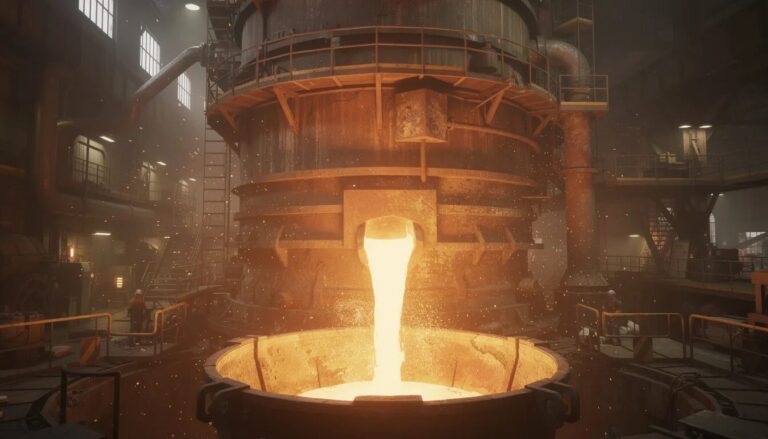
Pyrometallurgy is a branch of extractive metallurgy that uses high temperatures to extract and refine metals from ores and concentrates. Pyrometallurgical processes are generally grouped into roasting, smelting, and refining. It involves methods such as roasting, smelting, and refining, often producing molten metal and byproducts like slag and gases.
Most pyrometallurgical processes require significant energy input to maintain the high process temperature necessary for thermal reactions. Pyrometallurgy is a thermal process that transforms raw materials into pure metals or refined mineral products.
Why does pyrometallurgy matter? It is the oldest and still one of the most important methods of metal extraction, especially for iron, copper, and lead.
According to the World Steel Association, over 70% of global steel production comes from pyrometallurgical processes such as blast furnaces.
The History of Pyrometallurgy
Pyrometallurgy dates back thousands of years, with ancient civilizations smelting copper and bronze. The Iron Age marked a period of global expansion.
Modern pyrometallurgy evolved in the 19th and 20th centuries, with the introduction of blast furnaces, converters, and electric arc furnaces.
Today, modern refining includes both fire refining, a thermal process using high-temperature furnaces to remove impurities, and electrolytic processes.
These advancements have expanded the capabilities of traditional pyrometallurgy, making it central to the production of steel, copper, aluminum, and many other metals.
Terms to Know
- Roasting process: A thermal gas-solid reaction used to oxidize or transform ores, often as a pre-treatment in metal extraction.
- Partial roasting: A roasting process where sulfur is only partially removed from sulfide ores due to incomplete oxidation, allowing selective sulfur removal.
- Dead roasting: The complete oxidation of sulfide ores to form metal oxides, with all sulfur removed as sulfur dioxide.
- Sulfation roasting: A roasting process that converts sulfide ores into metal sulfates by controlling temperature and gas conditions.
- Selective roasting: A process targeting specific metals or sulfides for reaction by optimizing temperature and gas atmosphere to favor certain chemical pathways.
- Roasting: Heating ores in air to remove volatile components or oxidize sulfides.
- Smelting: Melting ores to separate metal from gangue, producing a molten phase where metal and slag can be separated.
- Molten phase: The liquid state of metal or slag during smelting, essential for separation and purification.
- Converter: Furnace for oxidizing impurities in molten metal.
- Slag: By-product of impurities that separate from molten metal during smelting.
- Flux reacts: Describes how flux interacts with impurities like silicon compounds during smelting, forming slag to aid in impurity removal.
- Fire refining: A thermal refining method that removes impurities from molten metal using high-temperature treatment in a furnace.
- Pyrometallurgical refining: The use of high-temperature processes, such as roasting, smelting, and fire refining, to purify metals or produce intermediate products.
- Thermal decomposition: The breakdown of compounds by heat, often occurring in calcination or roasting processes.
- Calcination: A process involving the thermal decomposition of carbonates and hydrates, typically in a furnace, to drive off volatile substances.
- Physical separation: The mechanical sorting or separation of materials, such as discharging, dismantling, and sorting, before chemical processing in metal recovery.
- Intermediate compounds: Substances formed during pyrometallurgical processing that serve as feedstock for further extraction or refining steps.
The Pros and Cons of Pyrometallurgical Processes
Pros:
- Rapid and large-scale metal production.
- Can process a wide range of ores and concentrates.
- Established, reliable technology.
Cons:
- High energy consumption.
- Generates greenhouse gases and pollutants. The environmental impact of carbon dioxide emissions from pyrometallurgical processes has become only a recent worry, mainly due to increased awareness of climate change.
- Limited use for low-grade ores compared to hydrometallurgy.
- See our post on Environmental Impacts of Mining
Examples of Pyrometallurgy for Valuable Metals
- Iron & Steel (Global): Blast furnaces and basic oxygen furnaces are used to smelt iron from oxide ores, such as hematite and magnetite. Carbonate ores, like siderite, are often calcined before smelting to remove carbon dioxide. The feed material is prepared to ensure efficient reduction and metal extraction.
- Copper (Chile, USA): Smelting of copper sulfide concentrates involves roasting and smelting processes. Copper sulfide and iron sulfide are common sulfide feeds for these operations. During roasting, these sulfide feed materials are partially oxidized, producing sulfur dioxide and converting some sulfides to oxides, which are then smelted to extract copper.
- Lead & Zinc (Europe, China): Roasting and smelting are used for base metal recovery. Mixed sulfide feed, containing both lead and zinc sulfides, is often subjected to selective roasting or sulfation roasting before smelting. This allows different sulfides in the feed to react under controlled conditions, forming either oxides or sulfates to optimize subsequent metal extraction.
Electric smelting furnace feed is typically pre-treated to optimize metal recovery, and its behavior during roasting or smelting determines process efficiency.
How Pyrometallurgy Works in Metal Extraction
Roasting
Sulfide ores are subjected to high-temperature thermal reactions, leading to the thermal decomposition of minerals such as iron and calcium carbonates. This produces iron oxide and calcium oxide, releasing water vapor. Ferric hydroxide can also decompose to ferric oxide and water vapor during calcination.
Roasting can yield a solid metal oxide as an intermediate product (often called a calcine), and sulfur may be partially removed or completely oxidized, depending on the process. Less reactive elements such as Fe, Cu, Zn, Cr, Sn, and Mn are more readily extracted by these pyrometallurgical methods, whereas reactive elements may require special considerations.
Smelting
Ores are melted with fluxes and other materials in a thermal process that requires significant energy input to maintain the molten phase.
Flux reacts with other materials and impurities to form slag, separating it from the metal. Some smelting processes are autogenous, maintaining process temperature solely through exothermic reactions within the charge.
Converting/Refining
Pyrometallurgical refining aims to produce pure metals or intermediate compounds. Impurities are oxidized and removed, and the process may target extraction of one metal or several elements extracted from the ore.
Casting
The metal forms produced are poured into molds for further processing into refined mineral products.
In copper pyrometallurgy, concentrates are roasted and smelted to form matte (Cu-Fe-S), then converted to blister copper (~98-99% pure).
Environmental Considerations in Pyrometallurgy
Pyrometallurgy plays a crucial role in extractive metallurgy by enabling the recovery of valuable metals from metallurgical ores through a series of physical and chemical transformations.
However, these high-temperature processes come with significant environmental considerations. One of the main concerns is the emission of carbon dioxide during smelting, which contributes to the greenhouse effect and climate change.
Additionally, roasting metal sulfide ores to produce solid metal oxides releases sulfur dioxide gas, a major air pollutant if not properly controlled. The use of electrical heat in furnaces and the generation of by-products like slag further add to the environmental footprint.
To address these challenges, the industry is increasingly adopting sustainable practices, such as utilizing renewable energy sources, improving waste management, and developing cleaner technologies that reduce emissions and minimize the impact on the environment.
As pyrometallurgy continues to evolve, balancing the extraction of metals with environmental responsibility remains a top priority.
Sustainable Metal Extraction through Pyrometallurgy
Achieving sustainability in metal extraction through pyrometallurgy involves optimizing processes to reduce environmental impact while maintaining high efficiency.
One practical approach is the use of autogenous processes, in which the heat required for metal extraction is generated by the exothermic reaction of the feed materials themselves, thereby minimizing the need for external energy sources. Careful control of temperature and gas conditions within pyrometallurgical processes can further enhance metal recovery rates and decrease waste.
The adoption of advanced technologies, such as electric smelting furnaces, enables more precise control of process parameters and lower emissions. Additionally, recycling metals through pyrometallurgical methods not only conserves natural resources but also reduces the environmental footprint associated with primary metal production.
By integrating these strategies, the industry can continue to meet the demand for metals while supporting a more sustainable future.
Applications in Battery Recycling
Pyrometallurgy is increasingly important in battery recycling, especially for recovering valuable metals from spent lithium-ion batteries.
Through thermal treatment, metals such as cobalt, nickel, and copper can be efficiently extracted from used batteries, helping to address the growing challenge of electronic waste.
However, the process is not without its limitations. During pyrometallurgical recycling, some metals may form metal sulfates rather than the desired metal oxides, and elements such as lithium, aluminum, and manganese often end up in the slag, making their recovery more difficult.
Despite these challenges, pyrometallurgy serves as a practical pre-treatment step, preparing battery materials for further processing with hydrometallurgical techniques.
By combining both methods, it is possible to maximize the recovery of valuable metals and reduce the environmental impact of discarded batteries, supporting a more circular approach to resource use in the electronics industry.
Tips and Reminders for Pyrometallurgy
- Control furnace temperatures to optimize recovery.
- Capture and recycle off-gases to reduce emissions.
- Integrate slag recycling to recover valuable by-products.
- Tip: Consider pre-treating reverberatory furnace feed through roasting. This preparatory step can enhance the efficiency of subsequent smelting processes by partially oxidizing or sulfating the ore.
Supporting Cluster Post to Include: [Sustainable Mining]
Analyzing Physical and Chemical Transformations in Pyrometallurgy
Key performance metrics:
Standard processes analyzed include roasting, smelting, and refining.
- Energy Use: GJ per ton of metal.
- Metal Recovery Rate: % yield of metal from ore.
- Emission Levels: SO₂, CO₂, and particulate matter.
Modern copper smelters can achieve >95% copper recovery but may emit millions of tons of SO₂ annually if not controlled.
Supporting Cluster Post to Include: Mining Economics
Resources for Pyrometallurgy
- Books: Extractive Metallurgy of Copper by Davenport et al.
- Organizations: World Steel Association, International Copper Study Group.
- Journals: Metallurgical and Materials Transactions.
Closing
Pyrometallurgy remains the backbone of modern metallurgy, producing the majority of the world’s iron, steel, and copper. Despite environmental challenges, it continues to evolve with cleaner technologies and remains vital to the global industry.
Explore our [Guide to Metallurgical Processes] to compare pyrometallurgy with hydrometallurgy.